
Sunday, June 7, 2026
  • Login
The Southern African Times
  • Home
  • Southern Africa
  • Business
    • African Start ups
    • African Continental Free Trade Area
  • Technology
    • Lifestyle
      • Health
      • Culture
      • Food and Drink
      • Entertainment
  • Opinion
  • Sports
  • SAT Jobs
    • Events
  • About Us
    • Advertise with Us
    • Contact Us
No Result
View All Result
  • Home
  • Southern Africa
  • Business
    • African Start ups
    • African Continental Free Trade Area
  • Technology
    • Lifestyle
      • Health
      • Culture
      • Food and Drink
      • Entertainment
  • Opinion
  • Sports
  • SAT Jobs
    • Events
  • About Us
    • Advertise with Us
    • Contact Us
No Result
View All Result
The Southern African Times
No Result
View All Result
Home Environment

Technology in Agriculture Enhancing Food Security in Africa

by SAT Reporter
March 16, 2020
in Environment, Just In
0
Technology in Agriculture Enhancing Food Security in Africa

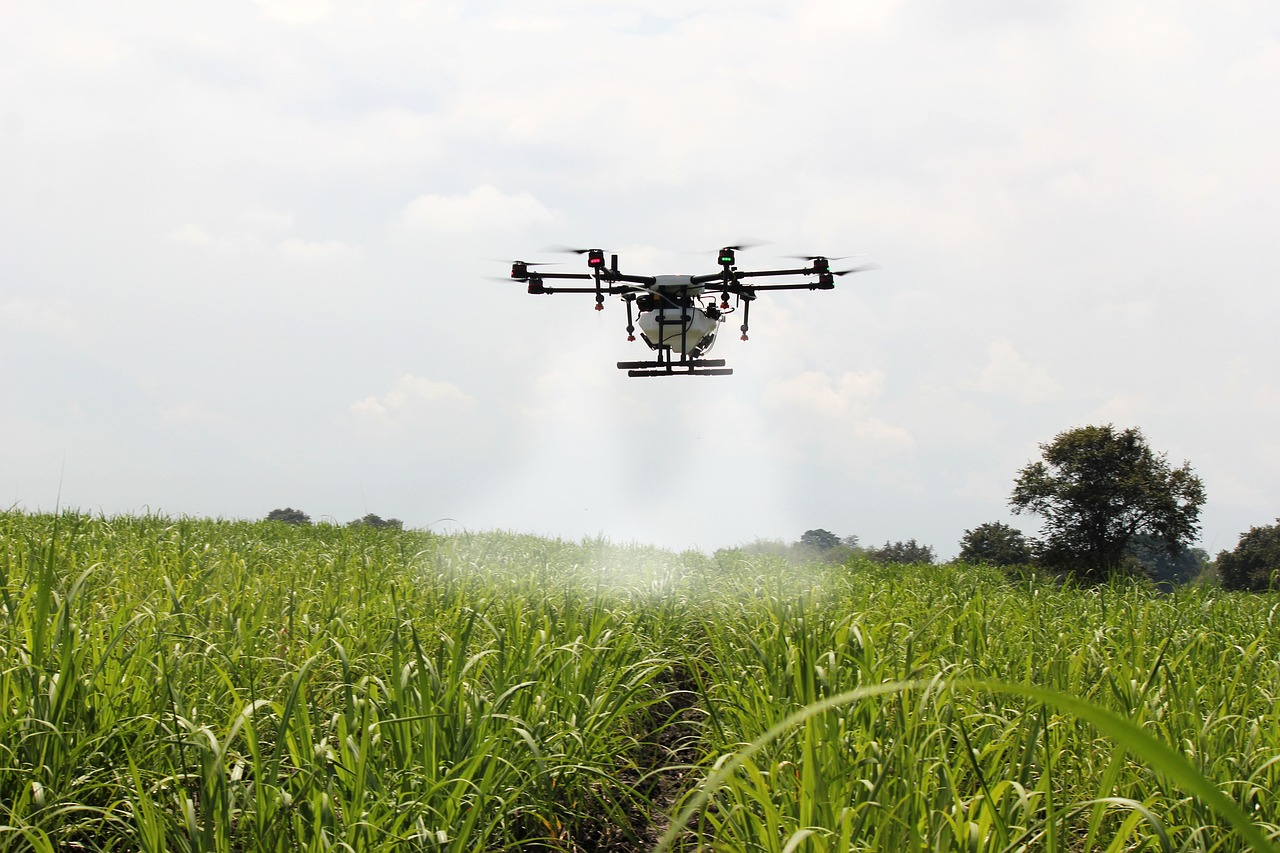
Africa needs more innovation in the agricultural sector that is both affordable and sustainable if it is to improve its levels of food security, says Dr Max Wengawenga, Assistant Chief Economic Advisor to the President of the Republic of Malawi.  Technology in agriculture can emhance food security in Africa.

Dr Wengawenga, who will be speaking at the Agritech Africa 2020 conference in Cape Town in June next year, says technology has the potential to make a meaningful impact on food security.  It is not a new concept, he says, as innovation and technology have been used to improve agricultural productivity over the years.

“However,” he says, “In Africa, my message to innovators would be that they should come up with more user-friendly and affordable technologies to increase food productivity, even among the resource-poor farmers.”


ADVERTISEMENT

Food security has been a topic of heated debate in South Africa recently with the proposed constitutional amendment to expedite land reform. Food security is intricately tied to a healthy and strong agriculture sector.

President Cyril Ramaphosa is acutely aware of this, saying at the time of announcing the African National Congress’s intention to amend Section 25 of the constitution: “The intention of this proposed amendment is to promote redress, advance economic development, increase agricultural production and food security.”

The chairperson of the Presidential Expert Advisory Panel on Land Reform and Agriculture Dr Vuyo Mahlathi called on the president in July this year, when handing over the recommendations of the panel, to expedite land reform in a way that will not compromise the country’s food security.

What is food security?

The United Nations Food and Agriculture Organisation(FAO) defines food security as existing “when all people, at all times, have physical, social and economic access to sufficient, safe and nutritious food which meets their dietary needs and food preferences for an active and healthy life”.  Thus, technology in agriculture is becoming a growing necessity.

Closer to home, South Africa is still largely recognised as a food-secure country. Nonetheless, there are still many people who do not have access to sufficient food. Most of these people lack the financial means to access food, and so it becomes clear that besides being able to physically produce food, a country needs sufficient economic opportunities to help reduce the number of food insecure people. Food is a fundamental human right. South Africa’s unique situation highlights that dealing with food security very often goes beyond the actual production of food.

Regionally and globally, the pursuit of food security may require agricultural productivity-enhancing technologies; it may require mechanisms aimed at raising income levels for people to have the financial means access enough, quality food; and it may involve improving marketing systems that would enable regions with a food surplus to trade with counterparts in food-deficit areas. You may well find it to be a combination of these strategies.

Support

In order to take advantage of the opportunities the fourth industrial revolution presents for agriculture, there needs to be widespread dissemination for farmers to utilise new technologies and increase their productivity. All stakeholders have to work together in a co-ordinated approach, says Dr Wengawenga.

“Policy makers need to support the work of researchers; the extension workers need to take the message and innovation to the farmers. Media is also important to help with the dissemination process,” he says.

Technology has already had a marked impact on agricultural productivity. Whether it is advances in the internet of things and artificial intelligence, or the use of smart machines or cutting-edge science, innovation has already brought about higher-yielding cop varieties, smarter use of water resources and battle plans to deal with pest attacks.

These technologies need not be the exclusive domain of resource-strong farmers. “Subsistence and emerging farmers, for instance, like being involved in the development of new technologies that address their problems,” says Dr Wengawenga. “This allows scientists first-hand experience of real problems on the ground and not perceived challenges.”

Climate change

Extreme weather events such as prolonged droughts and flooding are made worse by a shift in rainfall patterns and regional climate changes.

As the climate shift has a negative effect on agriculture, families and communities that rely on farming for their livelihood are the first to feel the economic stress, explains Dr Wengawenga. This is one of the ways climate change pushes people deeper into poverty. This increases the risk of social unrest and political instability.

The link between land and food security speaks to the commitment by Ramaphosa to prioritise food security during the land reform process South Africa.

Explaining how technology can and should be implemented to help agriculture mitigate the effects of climate change, Dr Wengawenga says: “Water harvesting techniques and suitable irrigation systems are needed to withstand the devastation effects of droughts.

“Crop varieties also need to be aligned to the weather patterns – agricultural scientists have to come up with fast-maturing varieties for areas having shorter rainy seasons and drought-resistant varieties for the areas that are getting dry,” says Dr Wengawenga.

Dr Wengawenga says that agritech holds immense possibility for Africa and the world. Agritech is broadly defined as the use of technology in agriculture, horticulture and aquaculture to improve yield and efficiency.

Previous Post

Namibia: African Development Bank approves $121.7 million loan, Euro 3 million grant to support water and sanitation sector

Next Post

Canadian PM Justin Trudeau’s wife Sophie tests positive for coronavirus

SAT Reporter

Related Posts

Waste Colonialism and the Burden of Electronic Waste in Africa
Environment

Waste Colonialism and the Burden of Electronic Waste in Africa

by SAT Reporter
April 10, 2026
South Africa Reports 16 Percent Decrease in Rhino Poaching in 2025
Environment

South Africa Reports 16 Percent Decrease in Rhino Poaching in 2025

by SAT Reporter
February 11, 2026
One in Five Mammal Species Face Extinction in Southern Africa, Regional Report Warns
Environment

One in Five Mammal Species Face Extinction in Southern Africa, Regional Report Warns

by SAT Reporter
January 22, 2026
Investing in Nature Could Unlock Trillions for the Global Economy, Says UN Report
Environment

Investing in Nature Could Unlock Trillions for the Global Economy, Says UN Report

by SAT Reporter
December 10, 2025
Mont-aux-Sources Weather Station Boosts Climate and Water Monitoring
Environment

Mont-aux-Sources Weather Station Boosts Climate and Water Monitoring

by SAT Reporter
December 2, 2025
Next Post
Canadian PM Justin Trudeau’s wife Sophie tests positive for coronavirus

Canadian PM Justin Trudeau's wife Sophie tests positive for coronavirus

Browse by Category

  • Africa AI
  • African Continental Free Trade Area
  • African Debt
  • African Start ups
  • Agriculture
  • AI Africa
  • Algeria
  • All News
  • Analysis
  • Angola
  • Arts / Culture
  • Asia
  • BOTSWANA
  • Botswana
  • BREAKING NEWS
  • BRICS
  • Burkina Faso
  • Burundi
  • Business
  • Business
  • Business Wire
  • Cameroon
  • Central Africa
  • Chad
  • China
  • Climate Change
  • Climate Changev
  • Community
  • Congo Republic
  • Conservation
  • Côte d’Ivoire
  • COVID 19
  • CRYPTOCURRENCY
  • Culture
  • Democratic Republic of Congo
  • Diplomacy
  • Eastern Africa
  • Economic Development
  • Economy
  • Education
  • Egypt
  • Elections 2024
  • Energy
  • Entertainment
  • Environment
  • Eritrea
  • Ethiopia
  • Europe
  • Fashion
  • Feature
  • Finance
  • Financial Inclusion
  • Food
  • Food and Drink
  • Foods
  • GABON
  • Ghana
  • Global
  • Global Africa
  • Guinea
  • Health
  • Humanitarian Aid
  • Immigration
  • in Southern Africa
  • International news
  • International Relations
  • Investment
  • Ivory Coast
  • Just In
  • Kenya
  • Lesotho
  • Libya
  • Life Style
  • Lifestyle
  • Literature
  • Malawi
  • Malawi
  • Mali
  • Markets
  • Mauritius
  • Middle East
  • Mining in Africa
  • Morocco
  • Mozambique
  • Namibia
  • Niger
  • niger
  • Nigeria
  • North Africa
  • North-Eastern Africa
  • Obituaries
  • Obituary
  • Opinion
  • PARTNER CONTENT
  • Politics
  • Property
  • Racism
  • Rwanda
  • Rwanda
  • SADC
  • SAT Interviews
  • SAT Investigation
  • SAT Jobs
  • Saudi Arabia
  • Senegal
  • Seychelles
  • Somaliland
  • South Africa
  • South Sudan
  • Sports
  • Startup Africa
  • STOCK EXCHANGE
  • Sudan
  • Sustainability
  • Sustainablity
  • Tanzania
  • Technology
  • Telecommunications
  • The Editorial Board
  • The Power Of She
  • Togo
  • Trade
  • Travel
  • Travel
  • Tunisia
  • Uganda
  • Uncategorized
  • Wealth
  • West Africa
  • World
  • World
  • Zambia
  • ZAMBIA
  • Zimbabwe
  • ZIMBABWE

Browse by Tags

#NewsUpdate #SouthAfrica #SouthernAfricanTimes #TheSouthernAfricanTimes AfCFTA africa African Continental Free Trade Area African development African Development Bank African economies African economy African Union Agriculture Angola Botswana China Climate change Cyril Ramaphosa Economic Development economic growth energy transition Ghana governance industrialisation Inflation Infrastructure Infrastructure Development International relations Investment Kenya Mozambique Namibia news Nigeria Regional Integration renewable energy Rwanda SADC South Africa Southern Africa sustainable development Tanzania United States Zambia Zimbabwe
ADVERTISEMENT

WHO WE ARE

The Southern African Times is a regional bloc digital newspaper that covers Southern African and world news. The paper also gives a nuanced analysis on news and covers a wide range of reporting which include sports, entertainment, foreign affairs, arts and culture.

Welcome Back!

Login to your account below

Forgotten Password?

Retrieve your password

Please enter your username or email address to reset your password.

Log In
  • Home
  • Southern Africa
  • Business
    • African Start ups
    • African Continental Free Trade Area
  • Technology
    • Lifestyle
      • Health
      • Culture
      • Food and Drink
      • Entertainment
  • Opinion
  • Sports
  • SAT Jobs
    • Events
  • About Us
    • Advertise with Us
    • Contact Us
Not enough quota to unlock this post
Unlock left : 0
Are you sure want to cancel subscription?